Publications de 2025
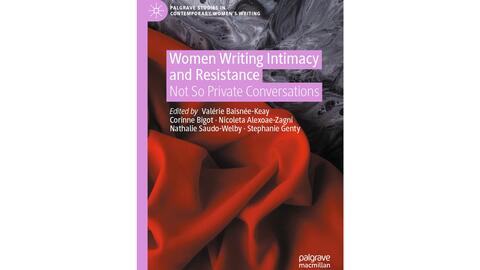
V. Baisnée, C. Bigot, S. Genty, N. Zagni et N. Saudo-Welby, ed (2025). Women Writing Intimacy and Resistance: Not so Private Conversations. Palgrave Studies in Contemporary Women’s Writing. Palgrave Macmillan.
Porté par la formule “The personal is political”, cet ouvrage collectif est consacré aux liens qui se nouent entre le politique, le privé, et l’intime. Il se compose de quinze chapitres portant sur des œuvres de fiction et des essais écrits par des femmes du monde anglophone entre les XIXe et XXIe siècles. La première partie traite des écrits de femmes qui se sont engagées pour des causes touchant à l’intimité féminine. La deuxième partie examine des textes qui mettent en récit une naissance, un viol, la pauvreté ou la discrimination raciale dans des contextes coloniaux et patriarchaux qui menacent l’intégrité féminine. S’appuyant sur le concept de « Public Intimacy » (Laurent Berlant), la troisième partie est consacrée aux espaces intimes. La dernière section interroge le paradoxe suivant : à mesure que l’intimité féminine et les femmes gagnent en visibilité, les femmes se trouvent-elles mieux protégées ou plus menacées ?
https://link.springer.com/book/10.1007/978-3-031-88192-3

Mélanie Torrent & Andrew Williams (ed) (2025). European Socialists Across Borders: Transnational Cooperation and Alternative Visions of Europe after 1945. Londres, University of London Press.
From postwar debates on institutionalised cooperation in Western Europe to the ambitions of the European Union in the post-Cold War era, this volume investigates the impact of socialist networks on European construction and integration, and the role of European socialism in international (dis)orders. It assesses how socialist networks were influenced by relations with socialist parties and groups outside Europe, and how they navigated local, national and global politics. Collectively, the chapters explore four main areas: the relationship between the ideals of European cooperation and daily, routine and domestic politics; the shifting definitions of political elites and popular understandings of Europe, including the influence of people of African, Caribbean and Asian descent on the transformation of socialist thought, policies and practices in the European (ex-) imperial powers; the extent to which European socialists attempted to propose a postcolonial, postimperial agenda for Europe; and how European institutions were used, and with what results, by socialists and their contacts.
Reflecting on the successes and failures of transnational processes of socialisation, the role of cultural intermediaries and bridge-builders, and the reasons behind misunderstandings, failed projects and missed opportunities for peace and equality, the book examines how socialist politicians and activists conceived of Europe’s role in worldmaking in the transition out of conflict and empire. In doing so, the volume contributes to a better understanding of, and support for, cooperation across borders.
https://uolpress.co.uk/book/european-socialists-across-borders/
Publications de 2024
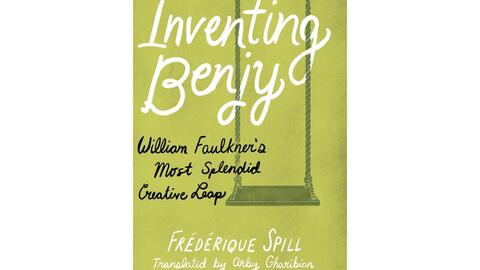
Frédérique Spill (2024). Inventing Benjy: William Faulkner's Most Splendid Creative Leap. University Press of Mississippi.
The starting point of this book is the monologue of Benjy Compson, the initial first-person narrator in Faulkner’s The Sound and the Fury (1929)—an “idiot,” as Faulkner himself called him. The book first focuses on the striking recurrence of disabled characters in Faulkner’s fiction, identifying their idiosyncratic representations while questioning the reasons for this compelling narrative choice. Benjy’s monologue, told by a narrator who is both deaf and dumb and hopelessly condemned to stupor—a monologue “[t]old by an idiot, full of sound and fury, [s]ignifying nothing” (Shakespeare, Hamlet, V,5)—is then envisioned as an impossible discourse. It is, however, upon this paradoxical discourse, which mostly rests on the pre-eminence of sensory perception, that Faulkner sets the foundation of a sophisticated poetics of idiocy which encompasses some of the most striking forms and figures of his leap into modern(ist) writing. In that respect, this book thoroughly examines Benjy’s discourse as a vast experimental workshop in which things and words are exclusively modelled by the senses. In the process, the intertwined dynamics of perception and language are simultaneously dismantled and reinvented, while Faulkner’s writing acquires a dense phenomenological dimension. In other words, this study regards the author’s choice to place a disabled character at the center of perception as the inaugural and emblematic gesture of his writing.
https://academic.oup.com/mississippi-scholarship-online/book/58699

Mélanie Torrent (2024). Algerian Independence and the British Left. Solidarities and Resistance in a Decolonizing World. Londres, Bloomsbury.
Based on archives from governments, parties, organisations and individuals, this book investigates the relationship between the British left and Algerian liberation movements during the Algerian War of Independence (1954-1962). It explores the presence of representatives of the Mouvement national algérien (MNA) and the Front de libération nationale (FLN) in London, where they actively sought support for peace, independence from France and the global end of European domination. By surveying their interactions with individuals and groups in the anticolonial left, including prominent Labour MPs, and Trotskyist groups, Asian and African associations and students' unions, Torrent shows how and why solidarity was interpreted differently across the left, and in relation to Britain's own end-of-empire conflicts.
Tracing connections across Europe and beyond, this book demonstrates how the war influenced conceptions of socialism, communism and internationalism in Britain, what being European meant, and what place the Commonwealth should have in a world where armed struggle and liberation diplomacy disrupted boundaries.
https://www.bloomsbury.com/uk/algerian-independence-and-the-british-lef…

Julie Assouly & Marianne Kac-Vergne (ed) (2024). Féminin/masculin : Réflexions sur le genre dans le cinéma et les séries anglophones. Artois Presses Université.
Cet ouvrage collectif propose de traiter quelques aspects de la question du genre dans une sélection de films et séries anglophones sous différents angles incluant la critique post-mulveyienne, la déconstruction des normes genrées, la masculinité, les films de genre et la réception des œuvres. Il répond à l’intérêt toujours croissant du monde universitaire et du public pour ce domaine en constante évolution, permettant l’analyse de films de différentes époques, des années 1930 à aujourd’hui, sous un jour nouveau. Les films et séries ont de tout temps traité des relations genrées comme le miroir d’une époque, d’un climat socio-politique, d’une ère culturelle ou de mutations sociétales, devenant le terreau d’un champ d’étude foisonnant.
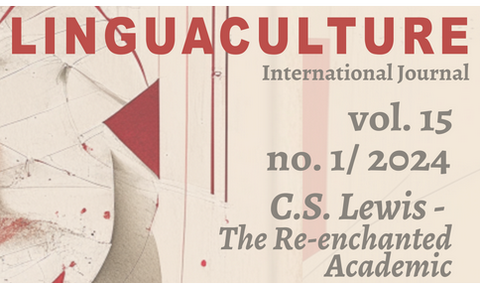
Anne-Frédérique Caballero & Teodora GHIVIRIGĂ (ed) (2024). 'C. S. Lewis – The Re-enchanted Academic'. Linguaculture, vol. 15, n°1.
https://journal.linguaculture.ro/index.php/home/issue/view/35
Publications de 2023
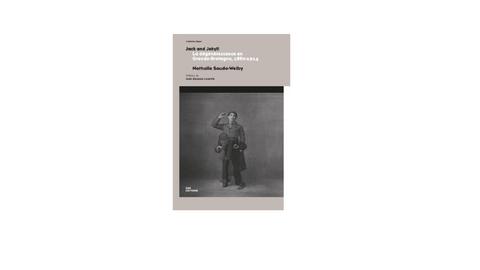
Nathalie Saudo-Welby. La dégénérescence en Grande-Bretagne 1880-1914. Préface de Jean-Jacques Lecercle. ENS éditions, « Collection Signes ».
Résumé
Dans les années 1880, le sentiment du déclin qui hante les pays européens prend la forme d’un diagnostic de dégénérescence. Situé au croisement de la civilisation, de l’histoire des idées et de l’analyse littéraire, le présent ouvrage décrit cette formation discursive en Grande-Bretagne dans les textes théoriques et la fiction. A partir des textes pseudo-scientifiques (histoire naturelle, psychiatrie, criminologie…) qui ont inspiré pensée de la dégénérescence, on élabore une « encyclopédie » qui permet d’apporter un éclairage nouveau sur de célèbres romans fin-de-siècle, appartenant en particulier au genre gothique.
https://books.openedition.org/enseditions/47176?lang=fr
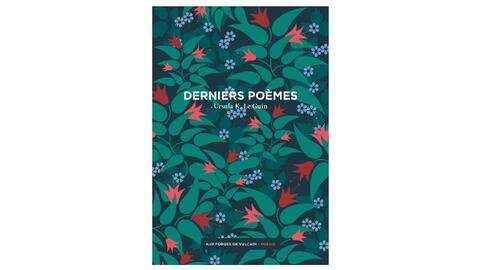
Ursula K. Le Guin. Derniers Poèmes. Traduction de l’anglais (États-Unis) d’Aurélie Thiria-Meulemans. Aux Forges de Vulcain.
Résumé
Adulée pour ses chefs-d’œuvre de science-fiction et de fantasy, Ursula K. Le Guin (1929-2018) se voyait avant tout comme une poétesse. Les éditions Aux forges de Vulcain publient pour la première fois en français une partie de cette œuvre poétique magistrale. Jouant avec les formes traditionnelles de la poésie de langue anglaise et les influences taoïstes qui lui étaient chères, Ursula K. Le Guin écrit une poésie à la fois quotidienne et métaphysique. Ses deux derniers recueils sont un regard en arrière et une réflexion lancinante sur le grand âge et la mort comme voyage vers l’ouest.
Édition bilingue.
Accéder au site web de l'éditeur
Charles Yu. Systèmes. Nouvelle au sein du projet Decameron du New York Times. Traduction de l’anglais (États-Unis) d’Aurélie Thiria-Meulemans.
Le Projet Décaméron rassemble vingt-neuf nouvelles de grands auteurs de notre temps – dont Margaret Atwood, Paulo Giordano, Leïla Slimani ou Tommy Orange – écrites pendant la pandémie de Covid-19 et publiées par le New York Times Magazine.
En 1353, Boccace écrivait le Décaméron, recueil dans lequel un groupe d’hommes et de femmes se racontent cent histoires pour passer le temps après avoir fui la peste qui ravage Florence. En mars 2020, les éditeurs du New York Times Magazine lancent le Projet Décaméron : rassembler des récits de tous horizons au moment même où le monde se confinait. Vingt-neuf auteurs et autrices ont répondu à l’appel. Ces « nouvelles nouvelles », selon l’expression consacrée, varient dans leur ton, leur forme, leur sujet : l’une nous plonge dans l’algorithme de Google, une autre dans un immeuble de New York peu à peu déserté, une autre encore nous fait quitter la planète Terre. Mais, par-delà leurs différences, chacune est un vibrant hommage au pouvoir de la fiction aux heures les plus incertaines.
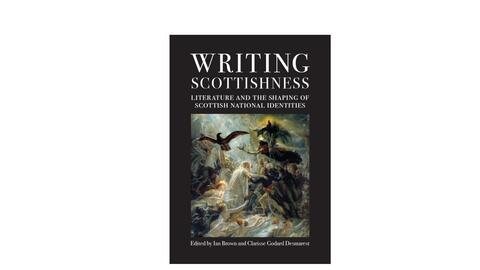
Ian Brown & Clarisse Godard Desmarest (eds) (2023). Writing Scottishness: Literature and the Shaping of Scottish National Identities. Scottish Literature International.
Scotland’s sense of national identity and cultural distinctiveness has long been articulated through its literature. These fourteen essays explore literary manifestations of Scottishness and examine the political, religious and cultural complexities, as well as the cross-national transfer of ideas, that have shaped Scottish writing and performance through the centuries. By analysing the works of canonical writers such as Walter Scott and Robert Louis Stevenson alongside sometimes marginalised figures, including Gaelic-language poets and women novelists, this volume offers a comprehensive and diverse understanding of writing Scottishness. The collection draws not only on Scottish texts but also Scottish song culture, cinematic adaptations and literary walking trails to shed new light on the nation’s negotiation of its identity through its cultural creations.
Lauriane Simony & Mélanie Torrent (ed) (2023). 'Diplomatic Departures: Negotiating Britain's International Outreach in the Contemporary World'. Contemporary British History, vol. 37, n°4.
In the context of the UK's withdrawal from the European Union, this special issue examines a series of diplomatic departures - breaks in diplomatic relations, sudden or radical changes in international or regional policies, relations with dissidents - to shed light on how the interests, means and actors of British international relations were redefined in those moments, and to assess the factors behind the success, or failure, of British influence during ruptures in diplomatic routine. Contributors interrogate the place of the United Kingdom in a world of networks, from the interwar years to the contemporary period, between the (post-) Cold War and the long ends of empire, from Asia to the Pacific and Africa, thereby reflecting on the plurality and evolutions of interpretations of "Europe" as a concept and as a space.
https://www.tandfonline.com/doi/full/10.1080/13619462.2023.2237308
Edwige Camp-Piétrain, Clarisse Godard Desmarest (ed) (2023). 'Nation and nationalism in Scotland: Cultural and Political Identity'. Revue LISA/ LISA e-journal, vol. 21, n°56.
This issue explores how cultural identity and political nationalism have related to each other over the course of Scotland’s history. Through a series of detailed studies, we examine the roots of political and cultural nationalism and consider how their expressions have changed from the Middle Ages through to the present. By viewing these phenomena over a long period, we highlight long-term changes in the way they relate to each other, challenging interpretations of nationalism that see the political and cultural realms as straightforwardly equivalent and mutually supportive. In doing so, we hope to contribute to a more nuanced approach to both historical and contemporary nationalisms, with their complex and ever-evolving interrelations of social, cultural, political and economic factors.
Clarisse Godard Desmarest & Nora Plesske (ed) (2023). 'Cities in Scotland: Cultural Heritage and National Identity'. Angles. New Perspectives on the Anglophone World, 16.
This special issue of Angles reflects on Scotland’s cultural heritage as an important national asset with a focus on cities. Instead of the country’s natural heritage, which is often favoured in analyses of Scotland’s past, the journal assesses its distinctive urban heritage and how this relates to issues of national identity. Taking a broad approach to Scotland’s urban heritage, the journal includes contributions on urban development, preservation, architecture, collective and public memory, and tourism as well as documentary film and literature spanning from the early modern period to the present.
Publications de 2022
- Olivier Burtin. A Nation of Veterans: War, Citizenship, and the Welfare State in Modern America. University of Pennsylvania Press, 2022.
A Nation of Veterans examines how the United States created the world’s most generous system of veterans’ benefits. Though we often see former service members as an especially deserving group, the book shows that veterans had to wage a fierce political battle to obtain and then defend their advantages against criticism from liberals and conservatives alike. They succeeded in securing their privileged status in public policy only by rallying behind powerful interest groups, including the Veterans of Foreign Wars, the Disabled American Veterans, and the American Legion. In the process, veterans formed one of the most powerful movements of the early and mid-twentieth century, though one that we still know comparatively little about.
In examining how the veterans’ movement inscribed martial citizenship onto American law, politics, and culture, A Nation of Veterans offers a new history of the U.S. welfare state that highlights its longstanding connection with warfare. It shows how a predominantly white and male group such as military veterans was at the center of social policy debates in the interwar and postwar period and how women and veterans of color were often discriminated against or denied access to their benefits. It moves beyond the traditional focus on the 1944 G.I. Bill to examine other important benefits like pensions, civil service preference, and hospitals. The book also examines multiple generations of veterans, by shedding light on how former service members from both world wars as well as Korea and the Cold War interacted with each other.
This more complete picture of veterans’ politics helps us understand the deep roots of the military welfare state in the United States today.
Introduction
Part I. Ascent
Chapter 1. Reform and Reaction: Veterans’ Politics in the Interwar Years
Chapter 2. Rebirth: The Veterans’ Movement in World War II
Chapter 3. Clash: Intergenerational Transition and the Postwar Housing Crisis
Chapter 4. Generations United: The Fight over the First Hoover Commission
Part II. Eclipse
Chapter 5. A House Divided: Anticommunism and its Discontents
Chapter 6. Consolidation and Backlash: The Korean War in the Shadow of World War II
Chapter 7. Generations Apart: The Problem of Economic Security for Aging Veterans
Epilogue. The Legacies of Martial Citizenship
- Catherine Delyfer et Nathalie Saudo-Welby, (dir.) "The New Woman and Humour". Cahiers victoriens et édouardiens 96 (automne 2022).
In late Victorian satirical magazines, comedies and conversation, the New Woman was an inexhaustible source of fun. For the opponents of women’s emancipation, ridicule was a weapon, which could win them allies even among women. For the feminist writers, ridicule was a constant threat, which they usually negotiated by asserting their womanliness and inviting their readers to take their demands seriously.
Hence, the woman’s rights woman was constantly criticized for her total absence of humour. “For the New Woman there is no such thing as a joke”, Ouida wrote in 1894. A year later, Hugh Stutfield commented in his antifeminist essay “Tommyrotics” that there was “no place left for humour” in New Woman novels: her fiction was spoiled by excessive realism, ponderous didacticism and a tendency to take things much too seriously.
As a target of satire and a comic victim, the New Woman quickly learnt how to put humour to her own use. By being funny, she made herself more pleasant to male readers and more tolerant of them. Ella Hepworth Dixon’s My Flirtations (1892), originally published anonymously in the Lady’s Pictorial, was considered by the Saturday Review as “one of the most amusing books we have come across for a long time” (qtd in Fehlbaum 189). Even in her more pessimistic The Story of a Modern Woman (1894), Dixon’s emancipated female protagonist maintains that a sense of humour is “what women ought to cultivate above all things” (Dixon 45). In the New Woman’s satires of patriarchal thinking and male self-sufficiency, wit does have an instructive, “serious” function. Epigrammatic dialogues feature prominently in the novels and short stories of Sarah Grand and Mona Caird, as well as in their militant periodical essays which employ humour and irony to turn the tables on male critics. Irony, parody and comical reversals, in fiction and non-fiction alike, were among what Ann Heilmann has described as the New Woman’s “indirect strategies”.
In the twentieth century, the suffragettes’ methods were regularly described in the press as hysterical and not worth serious consideration. However, if we are to believe the American actress and feminist writer Elizabeth Robins, by the time the suffragists hardened their strategies in the early twentieth century, they had learnt how to use publicity, repartee and humorous effects to their advantage. In her comedy Votes for Women (1909), the suffragettes’ public demonstrations are considered “excellent Sunday entertainment”. “[R]idicule crumples a man up”, their sharp-witted public speaker exclaims, “It steels a woman. We’ve educated ourselves so that we welcome ridicule” (II, 1). Negotiating laughter has become integrated into the New Woman’s political apprenticeship.
Going counter to the perception of the New Woman’s humorlessness, this collection of essays will examine the rich and contradictory ways in which laughter, jokes, satire and comedy were deployed and reconfigured by New Women around the English-speaking world. It will engage with the political uses of humour, as it creates and invites distance. It will consider humorous practises as a source of empowerment: the use of comedy to destabilize power relations and to create a sense of shared enjoyment, community, and sisterhood. How did humour become integrated into feminist rhetorical practices? To what extent is it possible to speak of feminist humour?
- Marianne Kac-Vergne et Julie Assouly (ed.), From the Margins to the Mainstream: Women in Film and Television. Bloomsbury, 2022.
Part 1 Women speaking from the margins
Interview with Vivienne Dick
Chapter 1. Lizzie Borden and Vivienne Dick: Fighting for female filmmaking, Céline Murillo
Chapter 2. Daughters behind the camera, Nicole Cloarec
Chapter 3. Molly Haskell’s take on feminist fi lm theory: The place of feminist film criticism outside academia, Anne Hurault-Paupe
Part 2 Women in semi-independent cinema
Chapter 4. Racial bodies in Kathryn Bigelow’s Strange Days (1995), Hélène Charlery
Chapter 5. ‘She’s a whole lotta woman’: Pam Grier’s star image in Jackie Brown, David Roche
Chapter 6. Women on the border: A cosmopolitan approach to the representation of contemporary femininity in It’s a Free World … , Celestino Deleyto
Chapter 7. Marie Antoinette, Fashion queens and Hollywood stars, Sara Pesce
Part 3 Women protagonists in mainstream television and blockbusters
Chapter 8. Voice-overs: Renewing gender representations in American TV series, Anaïs Le Fèvre-Berthelot 199
Chapter 9. Moving into the mainstream: Pregnancy, motherhood and female TV action heroes,
Anne Sweet
Chapter 10. In the mouth of fearfulness: Women, power and the vagina dentata in contemporary American cinema, Charles-Antoine Courcoux
Chapter 11. Can women be superheroes? Reflections on American cinema and beyond, Yvonne Tasker
- Sophie Loussouarn (ed.), Brexit and its Aftermath. Bloomsbury, 2022.
The British referendum on the membership of the European Union on 23 June 2016 was a cataclysmic event in British and European politics. Years later the consequences are still unknown. This collection seeks to answer the key questions relating to the consequences of Brexit and the future of Britain. Will Brexit affect the British constitution? Is Brexit likely to lead to the breakup of the UK – with Scotland and Northern Ireland seeking independence? How will Covid-19 delay lingering political questions brought on by Brexit?
These key questions and more, relating to both domestic and foreign policy, are answered by a range of contributors including expert academics, policy-makers and Members of Parliament and addresses both European and British policy-making.
- Sophie Loussouarn, Civilisation britannique en fiches. Ellipses, 2022.
Un portrait global de la civilisation britannique, de son histoire et de ses transformations contemporaines :
15 fiches complètes sur des thématiques institutionnelles, sociales, économiques et culturelles.
Des lexiques thématiques, des études de documents et des thèmes d’application.
Chapter 1. Brexit and British diversity
Chapter 2. A fragile union
Chapter 3. The British Constitution
Chapter 4. The British Monarchy
Chapter 5. The Prime Minister and the Cabinet. The efficient parts of the Constitutution
Chapter 6. A bicameral system with a Lower and an Upper House
Chapter 7. A two-party political system?
Chapter 8. The end of the two-party system
Chapter 9. Britain’s economic decline and the Welfare State
Chapter 10. Britain’s relative decline on the international stage
Chapter 11. Britain and Europe
Chapter 12. The education system
Chapter 13. Ethnic diversity or fragmentation? Immigration and “Britishness”
Chapter 14. A multi-faith society
Chapter 15. The BBC
Publications de 2021
- Frédérique Spill et Randall Wilhelm (ed.), Journal of the Short Story in English 75 "Special Issue: Ron Rash".
Contents:
1 Foreword (Gérald Préher et Xavier Le Brun)
2 Introduction (Frédérique Spill et Randall Wilhelm)
From Cliffside to Casualties: Ron Rash’s Apprenticeship in Depth and Darkness (Brian Railsback)
3 “Their Ancient, Glittering Eyes”: A Story of Hieratic Vision (Françoise Palleau-Papin)
4 “A Wound So Deep and Ragged”: The Vulnerable Body of Appalachia in Ron Rash’s Short Stories (CK Walker)
5 Light Effects in Burning Bright (Frédérique Spill)
6 “A sure terrain, ... a permanent landscape of the heart”: Ron Rash’s Poetics of Textual Space (Gérald Préher)
7 Corpse Birds and Cooling Boards: Appalachian Deathways in Ron Rash’s Short Stories (Randi Adams)
8 Blue Balls: Masculinity and Hypothermia in the Short Stories of Ron Rash (Jessica Cory)
9 Men and Women in Ron Rash’s Civil War Stories in Something Rich and Strange (Patrycja Kurjatto-Renard)
10 Reading, Seeing, Remembering: Aesthetic Experience in Ron Rash’s Stories from Nothing Gold Can Stay (Marie-Christine Agosto)
11 Good Luck, Bad Luck in Ron Rash’s “Cherokee” (Marcel Arbeit)
12 Reconciling Literacy and Loss in Ron Rash’s Nothing Gold Can Stay (Erin M. Presley)
13 “A place where all manner of strange occurrences were possible”: The Marvelous Real in Ron Rash’s In the Valley (Randall Wilhelm)
14 “The Epicenter of Who I Am”: Ron Rash’s Roots in Aho, North Carolina (Martha Greene Eads)
Interviews
15 “Dwellings of Enchantment: Writing and Reenchanting the Earth”; An Interview with Ron Rash (Bénédicte Meillon)
16 In the Valley: A Conversation with Ron Rash (Frédérique Spill)
Short Story
17 French I (Ron Rash)
Bibliography
18 Ron Rash’s Short Fiction: A Bibliography (Frédérique Spill, Randall Wilhelm et Gérald Préher)
- Marie Laniel, Frédérique Spill et Aurélie Thiria-Meulemans (ed.), Polysèmes 25 "Lieux revisités".
Les articles réunis dans ce numéro sont, pour la plupart, issus de communications données dans le cadre du séminaire de littérature anglophone organisé par le laboratoire CORPUS de l’Université de Picardie-Jules Verne (UR-UPJV 4295), de 2018 à 2021. L’objet du séminaire était d’étudier la dynamique du retour vers des lieux, physiques et textuels, à l’œuvre dans la littérature et les arts du monde anglophone depuis la Renaissance. Malgré la diversité des aires géographiques représentées, du Pays de Galles peint par Wordsworth au Sud faulknérien, les textes étudiés ici sont tous animés par un tropisme fort vers des lieux d’apparence fondateurs – « premier œuvre » de l’humanité que serait la tour de Babel, paysage atemporel de la pastorale, étendues vierges des Grandes Plaines –, mais loin de fournir un récit stable des origines, cette « recherche de la provenance » s’effectue selon la logique de la généalogie foucaldienne, identifiée par Xavier Giudicelli dans son article : « elle ne fonde pas, tout au contraire », « elle inquiète ce qu’on percevait immobile, elle fragmente ce qu’on pensait uni ; elle montre l’hétérogénéité de ce qu’on imaginait conforme à soi-même » (Foucault 153). Il en est ainsi de la représentation de la tour de Babel, symbole d’un usage perverti du langage dans That Hideous Strength (1945) de C.S. Lewis, des rives de la Wye revisitées par un poète tourmenté dans « Lines Written a Few Miles above Tintern Abbey », des récits fondateurs subvertis par l’inceste et le métissage chez William Faulkner et Carlos Fuentes, des arcadies queer d’Aubrey Beardsley et Alan Hollinghurst.
- Bénédicte Miyamoto and Marie Ruiz (ed.), Art and Migration: Revisioning the borders of community, Manchester University Press, 2021.
This collection offers a response to the view that migration disrupts national heritage. Investigating the mediation provided by migrant art, it asks how we can rethink art history in a way that uproots its reliance on space and place as stable definitions of style. Beginning with an invaluable overview of migration studies terminology and concepts, Art and migration opens dialogues between academics of art history and migrations studies through a series of essays and interviews. It also re-evaluates the cultural understanding of borders and revisits the contours of the art world - a supposedly globalised community re-assessed here as structurally bordered by art market dynamics, career constraints, gatekeeping and patronage networks.
Contents:
1 Revisioning art and migration - Bénédicte Miyamoto and Marie Ruiz
Part I: Art, migration and borders
2 Empathy, migration and art: an interview with Dieter Roesltraete
3 Silenced migrants: an interview with David Antonio Cruz
4 Memorable mobilities: an interview with Axel Karlsson Rixon
5 Ambiguous attachments: creations of diasporic aesthetics and migratory imagery in Chinese-Australian Art - Birgit Mersmann
6 Retracing colonial choreographies in contemporary Native American art - Christopher Green
7 Race, migration and visual culture: the activist artist challenging the ever-present colonial imagination - Claudia Tazreiter
8 Precarious temporalities: gender, migration and refugee arts - Rachel A. Lewis
Part II : The migrants' paths in the arts
9 Global and translocal: an interview with Marina Galvani
10 Portrait of the artist as migrant: an interview with Robyn Asleson
11 Stories of Global Displacement: an interview with Massimiliano Gioni
12 A publication of one's own: identity and community among migrant Latin American artist in New York c. 1970 - Aimé Iglesias Lukin
13 'Nobody's darlings'? Edith May Fry and Australian expatriate art in the 1920s - Victoria Souliman
14 Agostina Segatori and the immigrant Italian models of Paris - Susan Waller
15 Gardens, migrations and memories: aesthetic and intercultural learning and the (re)construction of identity - David Bell
Part III: Mapping the researcher's identity
16 Photographing migrants and positionality: an interview with Leslie Ureña
17 Reflections on positionality - Bénédicte Miyamoto and Marie Ruiz
- Marie Ruiz, "Migration Infrastructure and Brokerage in Victorian Female Emigration Societies", Journal of Migration Studies 7.1 (2021): 24-50.
In the nineteenth century, female mobility was eased by a variety of intermediary structures, which interacted to direct the migration of British women to the Empire. Among these migration infrastructures were female emigration societies such as the Female Middle Class Emigration Society (1861–1886). This organisation was the first to assist gentlewomen in emigrating. It adopted a holistic approach to British female emigration by promoting women’s departure, selecting candidates, arranging their protection on the voyage, as well as their reception in the colonies. Grounded in a multifactorial perspective, this article offers an insight into how female migration brokerage came into being in the Victorian context. It intersects migration with gender and labour perspectives in a trans-sectorial approach of the history of female migration infrastructures in the British Empire, and reveals the diversity of transnational migration intermediaries interacting at meso level between female emigrants, non-state actors, and state institutions.
Publications de 2020
- "Faulkner in Amiens", The Faulkner Journal 32.1, Johns Hopkins University Press.
Sommaire :
- Introduction: "Faulkner's Continuities: Textuality, Materiality, History" - Peter Lurie
- "France's Encounter with Faulkner" - Frédérique Spill
- "Heirs-at-Large: Precarity and Salvage in the Post-Plantation Souths of Faulkner and Jesmyn Ward" - John T. Matthews
- "Toni Morrison and William Faulkner's Verbose Ghosts" - Solveig Dunkel
- "Texts of the Sons: William Faulkner, Günther Grass, and the Narration of Guilt" - Juliane Schallau
- "The Long Shadow of Joe Christmas: Visions of a Faulknerian Character in the Works of Jean-Paul Sartre, Claude Romano, and Jacques Rancière" - Aurélie Guillain
- Spectres de Poe dans la littérature et dans les arts, Jocelyn Dupont et Gilles Menegaldo (ed.), Le Visage Vert, 2020.
Monument permanent de notre horizon culturel, premier poète national américain selon Nabokov, Edgar Allan Poe (1809-1849), de son vivant souvent méprisé, est devenu en près de deux siècles une figure tutélaire pérenne du monde des arts et des lettres. Comme l’attestent les innombrables rééditions de son œuvre, ainsi que les reprises, réécritures ou hommages discrets, littéraires, cinématographiques ou autres (musique, bande dessinée, culture numérique), l’influence de Poe est considérable. Le phénomène n’est pas nouveau : on sait quel fut en France son ascendant sur les poètes symbolistes et modernistes, les surréalistes ainsi que le cinéma d’avant-garde. Et comment ne pas songer aux célèbres relectures de « La Lettre volée » par Lacan et Derrida ? Si l’on ajoute à cette liste ceux qui aiment à voir en Poe l’inventeur de la science-fiction, du récit policier et du gothique intériorisé, alors force est de constater que nul n’est à l’abri de l’influence poesque.
De nos jours, le fantôme d’Edgar Poe semble incarner toutes nos hantises et nos obsessions. Il constitue surtout un formidable réservoir de potentialités créatrices. C’est la raison pour laquelle les auteurs de cet ouvrage ont choisi de s’intéresser aux modalités de sa persistance au xxie siècle, par-delà les frontières artistiques, nationales et linguistiques..
Contributions de : Christophe Chambost • Élodie Chazalon • Christian Chelebourg • Florent Christol • Jocelyn Dupont • Jérôme Dutel • Camille Fort • Lauric Guillaud • Chloé Huvet • Pierre Jailloux • Henri Justin • Isabelle Labrouillère • Guillaume Labrude • Pénélope Laurent • Isabelle Limousin • Éric Lysøe • Sophie Mantrant • Gilles Menegaldo • Maryse Petit • Françoise Sammarcelli • Nathalie Solomon • Benoît Tadié • Dennis Tredy
- Chinatown, intérieur, Aux Forges de Vulcain, traduit par Aurélie Thiria-Meulemans
Chinatown, intérieur, c’est l’histoire d’un Américain d’origine asiatique qui essaie de trouver sa place dans la société américaine. Située dans la patrie d’Hollywood, cette épopée nous est contée sous la forme d’une quête du rôle idéal. Car c'est le rêve de toujours du héros : devenir Mister Kung Ku. Sauf que plus il monte les échelons, plus il comprend que Mister Kung Fu n’est qu’un autre rôle qu’on veut lui coller parce qu’il est asiatique. C’est un roman high-concept écrit sous la forme d’un scénario : le héros n’est ni « je » ni « il » mais il est désigné par un « tu ». Il suit le script qui peint sa vie comme une série télé en mélangeant les genres : la bonne vieille série policière, avec un flic noir et une flic blanche (et une tension amoureuse entre les deux), des scènes de kung fu, et on finit sur une superbe scène de court drama où l’Amérique se retrouve jugée pour son traitement de la communauté asiatique. Un roman virtuose, drôle et attachant : un Lala Land à la sauce aigre-douce.
- Marie Ruiz (ed.), Bridging Boundaries in British Migration History: In Memoriam Eric Richards, Anthem Studies in British History, Anthem Press, 2020.
This memorial book honours the legacy of Eric Richards’s work in an interplay of academic essays and personal accounts of Eric Richards. Following the Eric Richards methodology, it combines micro- and macro-perspectives of British migration history and covers topics such as diasporas, religious, labour and wartime migrations.
Eric Richards was an international leading historian of British migration history and a pioneer at exploring small- and large-scale migrations. Starting with a foreword from David Fitzpatrick and Ngaire Naffine’s eulogy, the book includes Richards’ last public intervention, given in Amiens, France, in September 2018. This volume brings together renowned scholars of British and migration history who pay tribute to Eric Richards – a remarkable historian, but also a gentleman who is remembered for his kindness and humbleness. He stood as a role model for early career researchers. The book combines local and global migrations as well as economic and social aspects of nineteenth and twentieth century British migration history.
Publications CORPUS antérieures
Lauriane Simony & Mélanie Torrent (ed) (2023). British Soft Power in Asia: a (Post-)Imperial Project?. Revue Française de Civilisation Britannique, XXIX-1.
Suite à l’ambition des gouvernements conservateurs après 2016 de faire du Royaume-Uni une « superpuissance du soft power », notamment en Asie, identifiée comme aire privilégiée des intérêts britanniques, ce numéro spécial rassemble historiens et politistes afin d’examiner sur un temps plus long les acteurs et vecteurs, les motivations idéologiques et stratégiques, des diplomaties et para-diplomaties culturelles. Les contributions, centrées sur des collectionneurs, des botanistes, des journalistes et agences de presse, le British Council et les décideurs de Whitehall, s’intéressent à la manière dont les ambitions coloniales et impériales se transmettent ou sont remises en question. Tout en montrant la place que joue l’Asie (dans ses multiples acceptions) sur l’échiquier mental de ceux et celles qui font le soft power britannique, le volume montre l’importance – encore trop peu considérée – de décentrer le regard vers les publics à qui s’adressent ces politiques, publiques et privées, dans les méthodologies de recherche comme dans les pratiques diplomatiques.